


Did you know that 95% of businesses cite data management as a significant challenge in 2025? After spending countless hours reading tech blogs, following industry forums and analyzing expert reviews online, I can share what I found to be some valuable insights about business intelligence platforms – choosing the right BI software is critical for staying competitive! In this comprehensive guide, we’ll explore the top business intelligence solutions that are transforming how companies make data-driven decisions.
The business intelligence landscape has evolved dramatically, moving beyond simple data visualization to offer sophisticated analytics capabilities that were once reserved for data scientists. Today’s platforms leverage artificial intelligence and machine learning to automatically surface insights, predict trends, and recommend actions based on your company’s unique data patterns. From automated reporting dashboards to predictive analytics features, these modern tools are democratizing data analysis – making it possible for teams of any size to extract meaningful insights without extensive technical expertise. The key is finding a platform that balances powerful functionality with user-friendly interfaces, scalability with cost-effectiveness, and comprehensive features with actual business value.
What is Business Intelligence Software?
Business Intelligence software has undergone a remarkable transformation from its early IT-dependent iterations to become what experts now describe as a company’s mission control center. Modern BI platforms like Tableau, Power BI, and Looker have revolutionized data analysis through powerful integration capabilities that unify diverse data sources, from basic spreadsheets to complex enterprise systems. The technology’s core framework consists of four essential components: data warehousing for centralized storage, analytics engines for pattern recognition, visualization tools for data presentation, and reporting functions for information sharing.
The impact of these tools extends across numerous sectors, with healthcare organizations utilizing it for capacity planning, retail for inventory optimization, manufacturing for efficiency monitoring, and non-profits for donor analytics. While the technology has evolved to include collaborative, cloud-based solutions with natural language processing capabilities, industry experts emphasize that successful implementation requires focusing beyond just dashboards to ensure data quality and preparation. This comprehensive approach has led to significant successes, such as organizations identifying marketing budget inefficiencies and optimizing operational processes through data-driven insights.
Key Points:
- BI has evolved from IT-dependent systems to user-friendly platforms accessible to non-technical users
- Modern solutions integrate four core components: data warehousing, analytics, visualization, and reporting
- The technology demonstrates versatile applications across healthcare, retail, manufacturing, and non-profit sectors
- Success requires emphasis on data quality and preparation, not just visualization
- Cloud-based solutions with natural language processing are making data analysis increasingly accessible
Top Business Intelligence Software Platforms for 2025
To help you better understand the different platforms that can perform various tasks to help make your business run more efficiently, I have compiled a list of software platforms from a couple of sites based on ease of use, pricing, features, interface, flexibility, and more. A short description of each is included alongside some “Bang for your buck” features.
1. Tableau
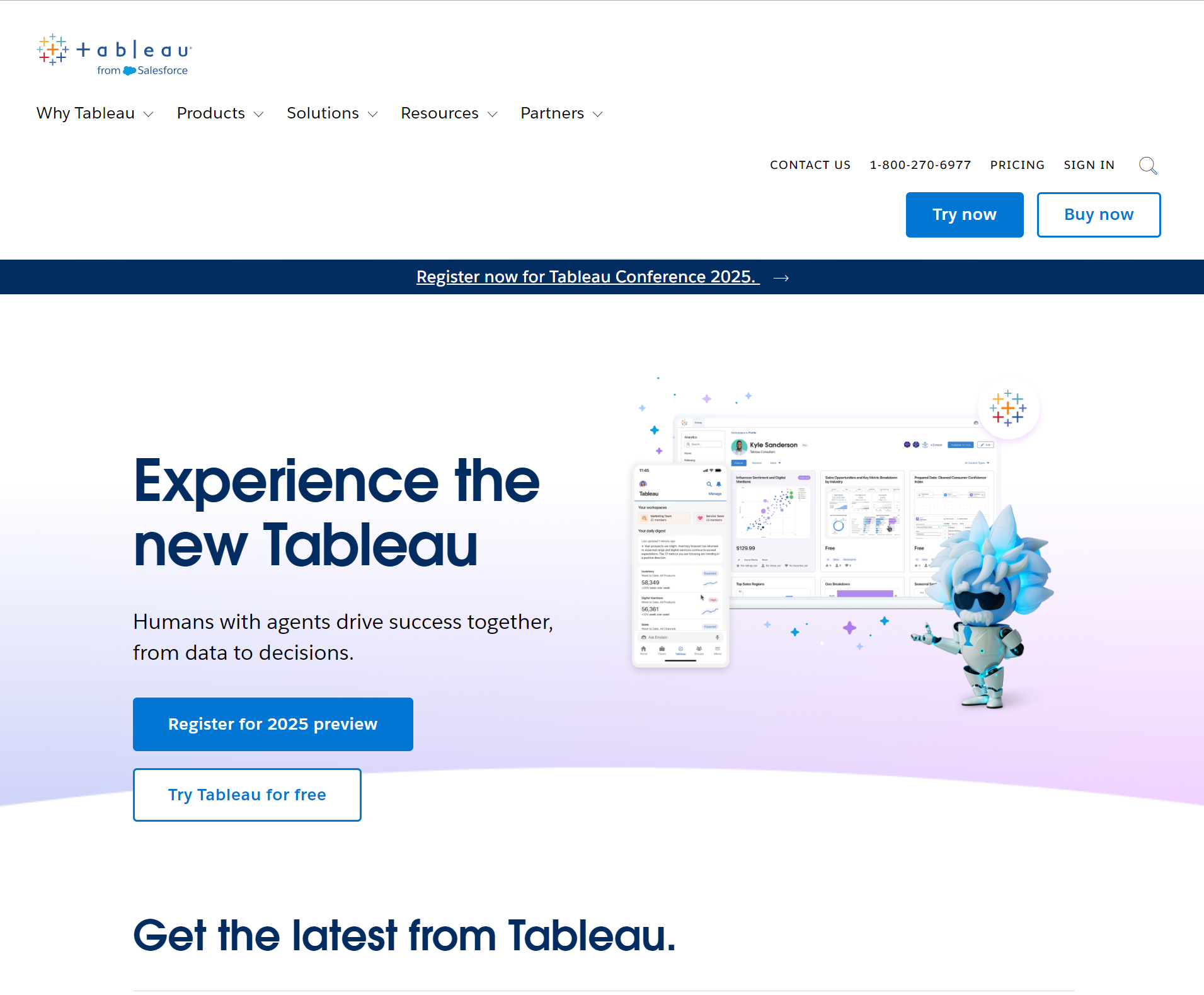
Tableau is a powerful business intelligence and data visualization software that helps organizations analyze and present their data effectively. The platform allows users to connect to various data sources (databases, spreadsheets, cloud services) and create interactive visualizations and dashboards without requiring extensive programming knowledge. Users can drag and drop fields to create charts, graphs, maps, and other visual elements.
2. Power BI
Power BI is Microsoft’s business intelligence and data visualization platform that enables users to transform data into interactive insights.
3. Looker
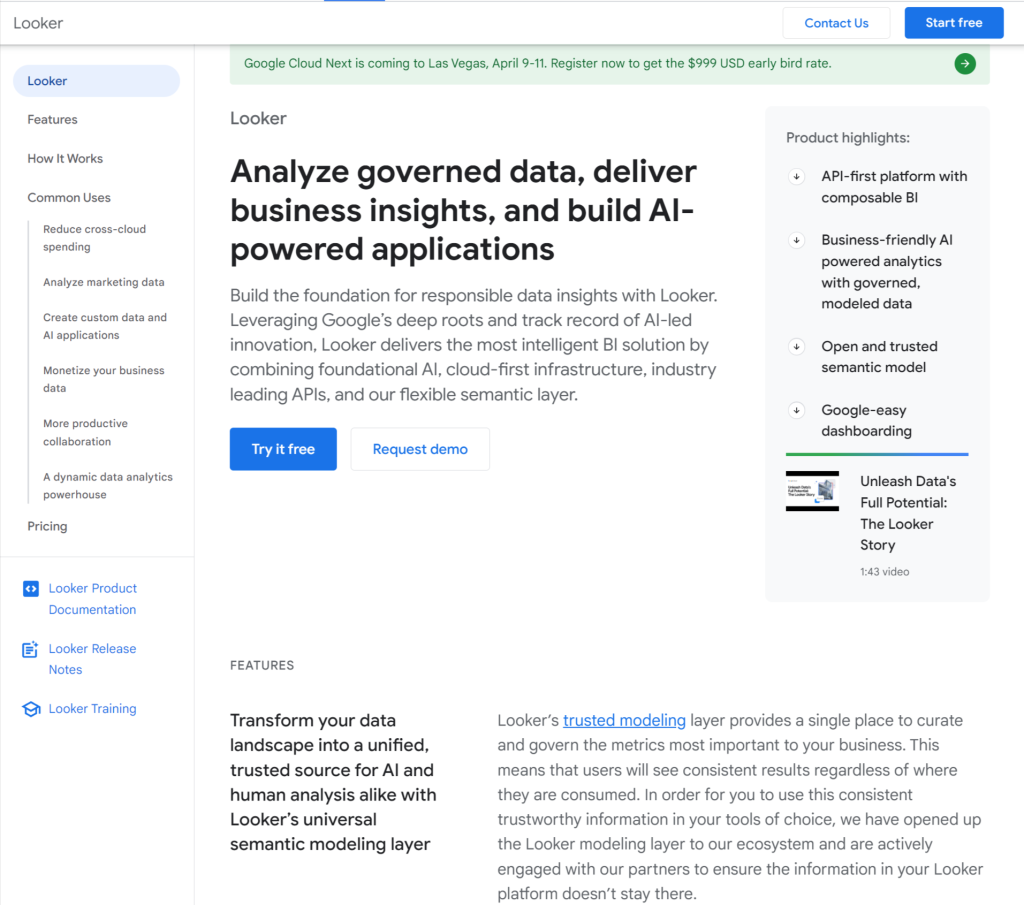
Looker is a modern, cloud-based business intelligence and data analytics platform, now owned by Google Cloud. It differentiates itself through its unique approach to data modeling and exploration.
4. ThoughtSpot
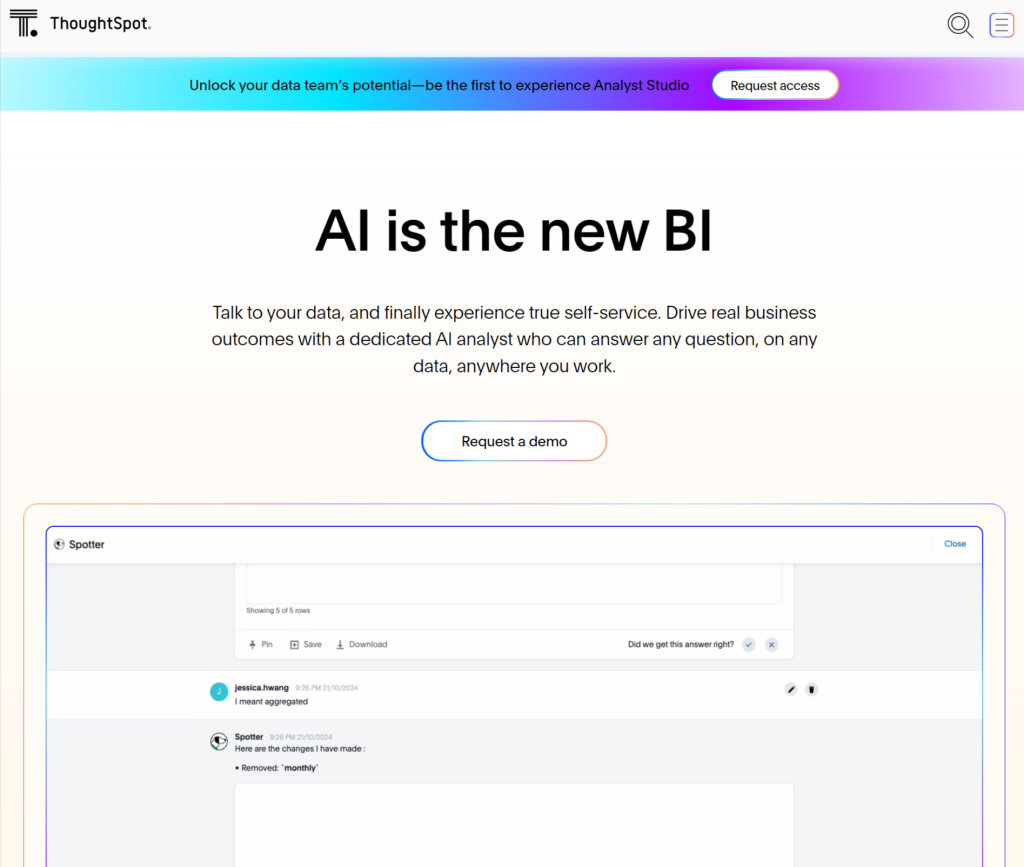
ThoughtSpot is a modern AI-powered analytics platform that stands out for its search-driven approach to data analysis and natural language processing capabilities.
5. Sisense

Sisense is a comprehensive business intelligence and analytics platform that specializes in handling complex data from multiple sources and making it accessible through interactive dashboards.
6. Domo
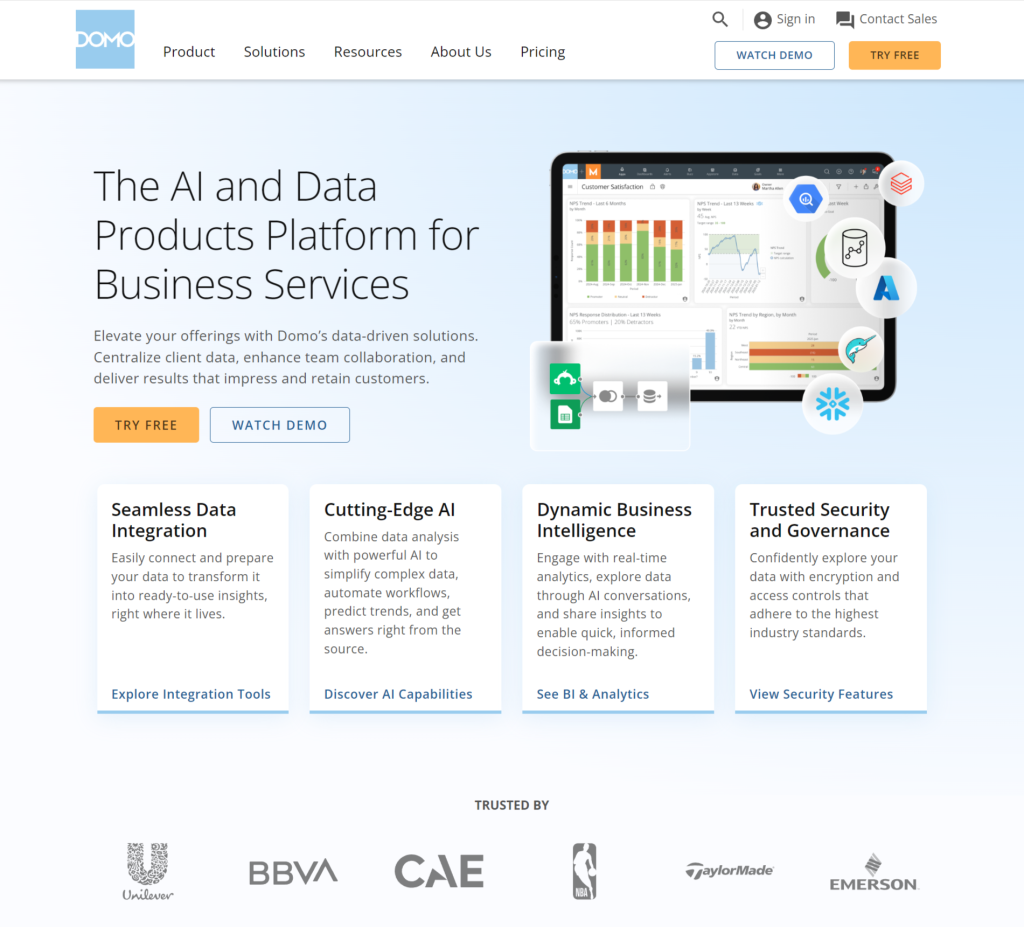
Domo is a cloud-based business intelligence and data visualization platform that focuses on providing comprehensive data integration, analytics, and collaboration capabilities in a single solution.
7. Preset
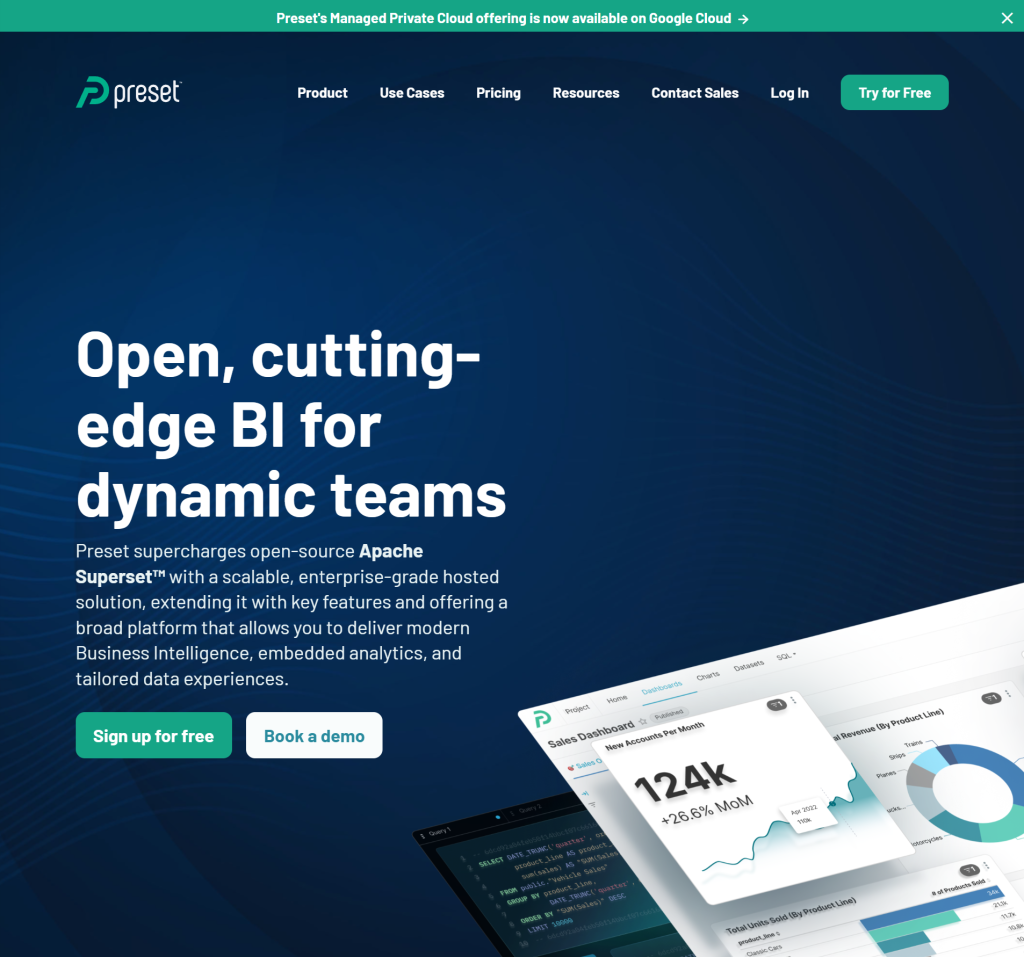
Preset is a modern, open-source business intelligence platform built on Apache Superset that focuses on self-service analytics and data visualization capabilities.
The landscape of AI-powered BI platforms in 2025 presents a diverse array of solutions, each with distinct strengths for different organizational needs. Cloud BI platforms like Tableau stand out for complex data visualization and real-time analytics. At the same time, Power BI excels in Microsoft-centric environments with its seamless Office integration and competitive pricing. Other notable players include Looker, praised for its LookML modeling layer, and emerging innovators like ThoughtSpot with its search-based analytics approach. For smaller implementations, platforms like Sisense and Domo offer streamlined deployment processes and comprehensive data connectors, while the open-source platform Preset is gaining attention for bringing enterprise features to the open-source space.
Industry experts emphasize that successful BI platform selection extends beyond feature comparisons to consider total ownership costs, including training and maintenance expenses. While cloud-based solutions are increasingly prevalent, on-premise deployments remain valuable for specific security requirements. Implementation specialists consistently note that platform-team alignment often proves more crucial than feature sophistication, with the most successful implementations stemming from careful consideration of organizational requirements, technical capabilities, and budget constraints rather than market leadership alone. This comprehensive approach to platform selection has become particularly important as organizations seek to maximize their return on investment in data analytics infrastructure.
The integration landscape for modern BI platforms continues to evolve rapidly, with vendors increasingly emphasizing native AI capabilities like natural language querying, automated anomaly detection, and machine learning integration that allows organizations to embed predictive analytics directly into their dashboards. Industry leaders are expanding their support for real-time streaming analytics and embedded analytics, processing millions of data points per second while maintaining sub-second query response times and allowing organizations to integrate AI-powered capabilities into operational applications. Vendors are responding to growing demands by offering specialized API frameworks and enhanced data governance features, including sophisticated lineage tracking, impact analysis, and automated compliance monitoring capabilities that help maintain data quality and regulatory compliance while scaling analytics operations.
Key Features to Look for in BI Software
Modern BI software features have evolved to prioritize practical functionality over complexity, with data integration capabilities serving as the foundation for successful implementations. Industry experts emphasize the importance of purposeful interactive visualizations, as demonstrated in healthcare settings where drill-down capabilities have transformed patient care analysis. The integration of AI and machine learning has proven particularly valuable in manufacturing environments, where automated anomaly detection enhances quality control processes, while natural language processing makes data analysis more accessible to non-technical users. Mobile accessibility has become equally crucial, with responsive design and native mobile apps playing a vital role in user adoption and on-the-go analytics.
Security and collaboration features have emerged as essential components of modern BI platforms, with implementation specialists highlighting how enhanced sharing capabilities and granular access controls directly impact project success and compliance requirements. The tech community consistently emphasizes that successful BI implementations focus on maximizing core features rather than implementing every available capability, with automated insights serving as a complement to human analysis rather than a replacement. Data governance features maintain quality and consistency across organizations, while the key to success lies in selecting features that align with specific organizational needs rather than pursuing comprehensive feature sets.
Key points:
- Data Integration and Visualization: Interactive visualizations with drill-down capabilities have revolutionized various sectors, particularly in healthcare where they’ve transformed patient care analysis through practical, purpose-driven implementations.
- AI and Accessibility Features: The integration of AI, machine learning, and natural language processing has enhanced both technical capabilities (like anomaly detection in manufacturing) and made data analysis more accessible to non-technical users through intuitive interfaces.
- Mobile-First Approach: The emphasis on mobile accessibility through responsive design and native apps has become crucial for user adoption and enabling real-time analytics access from any location.
- Security and Collaboration: Modern BI platforms prioritize enhanced sharing capabilities and granular access controls, directly impacting project success and ensuring compliance with various requirements.
- Strategic Implementation Philosophy: Success in BI implementation comes from selecting and maximizing core features that align with specific organizational needs, rather than attempting to implement every available feature without clear purpose.
Analysis and ROI Considerations
The true cost of such tools extends far beyond initial pricing, with industry experts highlighting the complexity of various pricing models including user-based, server-based, and consumption-based structures. While cloud solutions can reduce infrastructure costs, organizations often encounter unexpected expenses in data warehouse capacity, ETL tools, and hardware upgrades. Real-time analytics and training costs frequently exceed initial estimates, with some organizations reporting up to triple their projected budgets for specialized training and ongoing support. Implementation specialists emphasize the importance of thorough infrastructure assessment before budget finalization, noting that actual deployment costs can vary significantly based on existing systems.
ROI measurement requires consideration of both quantitative and qualitative benefits, as demonstrated in manufacturing implementations where improved inventory management led to measurable cost savings alongside enhanced decision-making efficiency. Industry experts consistently advocate for selecting solutions based on organizational fit rather than price point alone, citing cases where mid-range solutions outperformed more expensive alternatives due to better alignment with company capabilities. Success metrics should be clearly defined early, with financial sector case studies showing significant improvements in reporting efficiency when proper metrics are established. Professionals recommend pilot programs before full deployment and emphasize calculating total ownership costs over extended periods for accurate budgeting.
Organizations must carefully consider scalability costs and future expansion requirements when evaluating these investments, as growth-related expenses often emerge as significant budget factors in years two through five of implementation. Industry studies indicate that data storage costs typically increase by 40-60% annually as organizations expand their analytics capabilities, while user license costs can surge during rapid organizational growth phases, particularly in fast-growing sectors where companies may need to restructure their entire buisness architecture. Successful organizations address these challenges by implementing flexible licensing models and modular architectures, maintaining contingency budgets of 15-25% of annual BI operating costs, and regularly reviewing vendor agreements to ensure alignment with projected growth patterns.
Implementation Best Practices
Business Intelligence implementation success depends heavily on thorough planning and stakeholder engagement, with industry experts emphasizing the critical importance of a comprehensive discovery phase before any technical work begins. This foundation includes documenting all data sources, business processes, and reporting requirements while forming cross-functional teams that include IT, business units, and executive leadership. Data quality emerges as a fundamental concern, with professionals stressing the importance of thorough data auditing and cleansing before visualization work begins, particularly in manufacturing and inventory management contexts. System integration, especially in healthcare settings, requires careful documentation of integration points and comprehensive testing protocols.
The path to successful BI implementation extends beyond technical considerations to encompass user adoption strategies, security configuration, and change management practices. Rather than assuming natural user adoption, experts advocate for identifying departmental champions and creating pilot groups, supported by comprehensive training programs that cover both tool usage and data literacy. Performance testing under realistic conditions and establishing formal support structures, such as centers of excellence or super-user programs, prove essential for long-term success. Regular check-ins, user feedback sessions, and continuous improvement cycles maintain momentum and ensure sustained adoption, while proper security configuration and access control prevent unauthorized data access and maintain system integrity.
Maintaining and evolving BI implementations requires organizations to establish robust governance frameworks and adaptation strategies, typically implementing formal review cycles every 6-12 months to assess system usage patterns, identify emerging requirements, and evaluate new technological capabilities. Successful organizations establish dedicated data governance committees with both technical and business representatives to oversee data quality standards, usage policies, and system enhancement priorities, ensuring system evolution aligns with organizational objectives. Companies maintain detailed documentation of their BI architecture, including data lineage, business rules, and integration points, which proves invaluable during system updates and optimization initiatives like consolidating redundant reports, refining data models, and incorporating advanced analytics capabilities.
Industry-Specific BI Solutions
Business Intelligence implementations demonstrate distinct patterns and challenges across different industry sectors, with each field reporting unique success stories and implementation requirements. In manufacturing, companies have achieved dramatic operational improvements, including 40% reductions in machine idle time and 25% cuts in inventory costs through real-time analytics. Healthcare organizations have transformed their operations through comprehensive dashboards tracking everything from bed utilization to readmission rates, while retail and e-commerce businesses report some of the highest ROI figures, with one retailer discovering valuable customer purchase patterns leading to targeted marketing opportunities.
While fundamental business objectives often align across industries – focusing on customer understanding, operational optimization, and trend prediction – the specific metrics, regulatory requirements, and data integration challenges vary significantly by sector. Healthcare organizations must maintain HIPAA compliance, financial services adhere to SOX regulations, and European operations must consider GDPR requirements. Technical integration challenges also differ, with manufacturing focusing on IoT sensor integration, healthcare dealing with EHR format challenges, and retail combining in-store and online data sources. Despite these variations, successful BI implementations consistently deliver substantial value, with some organizations reporting unexpected benefits such as 45% reductions in customer support response times and significant improvements in customer satisfaction metrics.
Looking forward, industry analysts predict continued evolution in such implementation strategies, with a growing emphasis on predictive analytics and machine learning integration across all sectors. Organizations are increasingly moving beyond traditional descriptive analytics to embrace prescriptive capabilities, with early adopters reporting up to 60% improvements in decision accuracy. Cross-industry collaboration is also emerging as a significant trend, as businesses recognize the value of shared data insights while maintaining appropriate privacy and security measures. For example, healthcare providers are partnering with insurance companies to better predict patient outcomes, while manufacturers are working with logistics providers to optimize supply chain efficiency.
Conclusion
Selecting the right business intelligence software is a crucial decision that can significantly impact your organization’s success. I would recommend being careful in evaluating your needs against the features, costs, and implementation requirements of various BI solutions, so you can make an informed choice. Remember to consider factors like scalability, user-friendliness, and vendor support. Ready to transform your data into actionable insights? Start your BI journey alongside me by requesting demos from our top-recommended platforms! Finally, to close this informal introduction to my readers, I will end this section with a quote that resonates with first-time risk-takers “Your first business isn’t just about making money – it’s about making mistakes into stepping stones, data into decisions, and passion into prosperity.”